
Deerfield Township City Directory Collections
There is no authoritative annual Township-specific city directory run to consult. Deerfield Township is an unincorporated part of Warren County, so the documented trail is countywide and area material rather than a municipal series. The one verified title is Wiggins & McKillop’s Directory of Warren County for 1878. Its title establishes county scope only. No inspected entry or abbreviation key supports a claim about its fields, street ordering, or household conventions. Ask a local repository to inspect the volume before treating its wording as proof of a particular address or relationship.
| Collection | Years | Where Held | Access |
|---|---|---|---|
| Wiggins & McKillop Warren County Directory | 1878 | WCGS discovery inventory | Ask WCGS; no sample entry inspected |
| Area phone books | Years not published | WCGS bookcase 2 | On-site, verify a needed year |
| Western Star digital project | 1807-2013, with missing issues | Ohio Memory and WCGS | Free searchable and browsable images |
| Telephone directories and yearbooks | Years not published | Warren County Historical Society | Research request or visit |
That uncertainty is useful information. It prevents a false claim that a yearly Deerfield Township city directory, a reverse directory, or a complete shelf list has been verified. WCGS and the Warren County Historical Society can check their physical holdings for a name, era, or locality. County Archives offers a different lane through its historical indexes, maps, deeds, court material, and vital-record guides.
Deerfield Township Directory Limits
Old Deerfield did not always mean the modern Township boundary. The Township was established in 1803, and its original territory later included areas associated with Turtlecreek, Union, and Salem. A locality in a county directory can therefore point to a broader historic place, not a modern numbered street. Test the historical place name against the 1875 and 1891 Township maps, the Recorder’s legal description, and later county records before connecting it to a present parcel.
Warren County Genealogical Society is the strongest starting point for that careful comparison. Its public Resource Library is at 406 Justice Drive in Lebanon and is a FamilySearch Affiliate Library. Affiliate access can matter when a digitized FamilySearch item is restricted to that setting. The library’s public hours are Monday through Friday, 9 a.m. to 4 p.m.
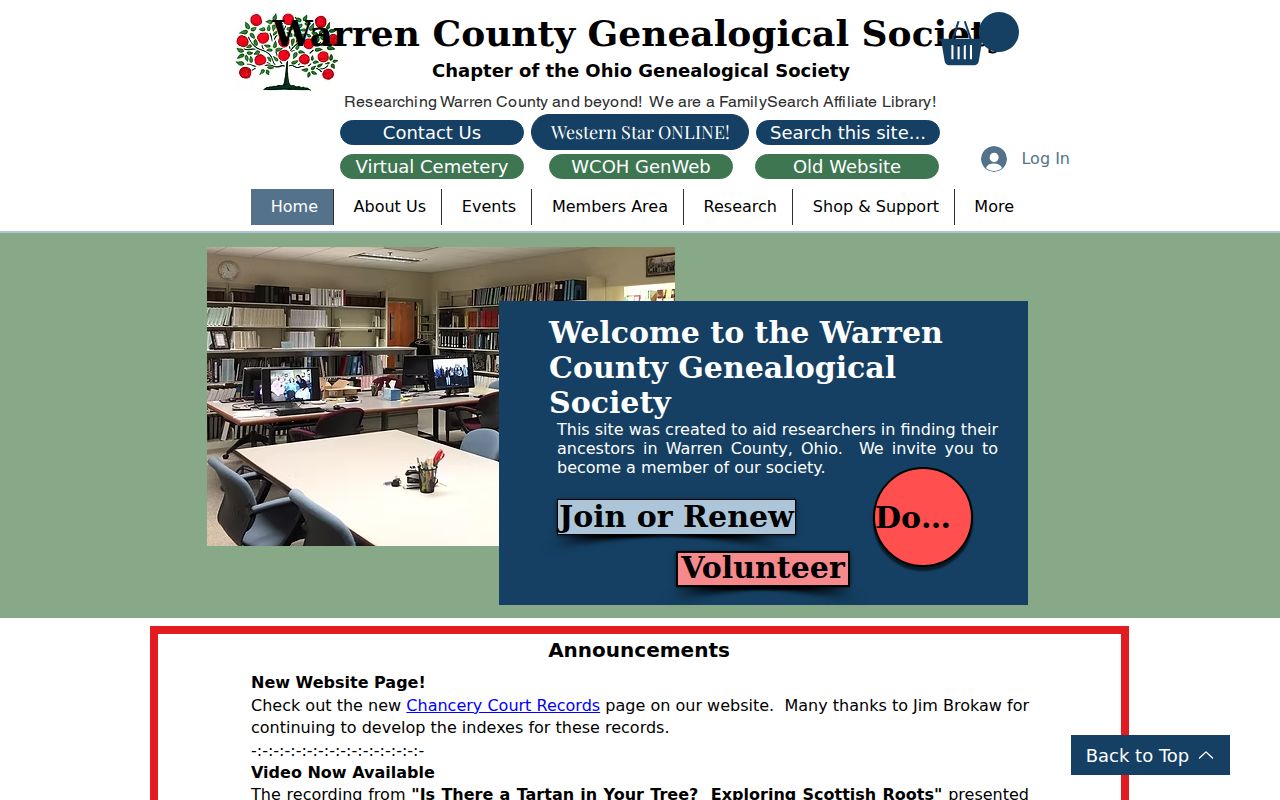
The library screen is a useful reminder that a directory question often becomes a shelf and source question. Bring spellings, approximate dates, and nearby community names, then ask staff which collection can actually be inspected.
Reading a Deerfield Township City Directory
An old entry should be copied before it is interpreted. No authoritative digitized page from the 1878 county directory or a local criss-cross run was found for this research. That means it would be wrong to promise that a volume supplies a current-style street address, a spouse, an occupation, an owner mark, or a standard abbreviation. Photograph or transcribe the page title, publication year, locality wording, and the volume’s own key first. A nearby name is a research lead until a primary record supports it.
| Publication title | Record the exact title and year, beginning with the verified 1878 Warren County title where applicable. |
|---|---|
| Locality wording | Copy the place name as printed; it may use historic Deerfield or another Warren County label. |
| Name form | Preserve initials, spelling, punctuation, and any printed relationship language without expanding it. |
| Address or place field | Confirm that an actual entry supplies one before tying it to a modern street or parcel. |
| Abbreviations | Use only the volume’s own key. No Wiggins & McKillop abbreviation key was inspected. |
- County directory
- A publication covering a county or its communities. The verified 1878 title is countywide, not proof of a Deerfield Township annual run.
- Criss-cross directory
- An address-ordered reference that can be useful when it exists. No local reverse or criss-cross run was verified here.
- Householder index
- An index organized around household headings. Confirm that a particular volume contains one before relying on it.
- Abbreviation key
- The publisher’s explanation of shorthand. Read it from the same volume rather than importing meanings from another directory.
These checks are not fussy extras. They keep a printed lead from becoming an invented biography, especially where early locality names overlap several later townships.
WCGS Deerfield Township Directory Shelves
WCGS’s March 2024 finding aid gives a practical map of the collection. Bookcase 2 groups Warren County history, elected-official material, census resources, and area phone books. Census is at bookcases 3 and 4. Funeral and obituary material is at 5 through 10, maps and atlases at 11 and 18, cemetery material at 13 and 14, vital material at 15, and Bible, marriage, will, and estate material at 16. Court, coroner, deed, land, tax, and divorce resources are at bookcase 17. Religious sources sit at 19, while family histories and folders occupy 37 through 45.
Those shelf targets make it easier to build a local timeline after a city directory lead. Copies are listed at 15 cents. The society’s online research resources can help frame a visit, but it does not fill the unverified directory-year gap.
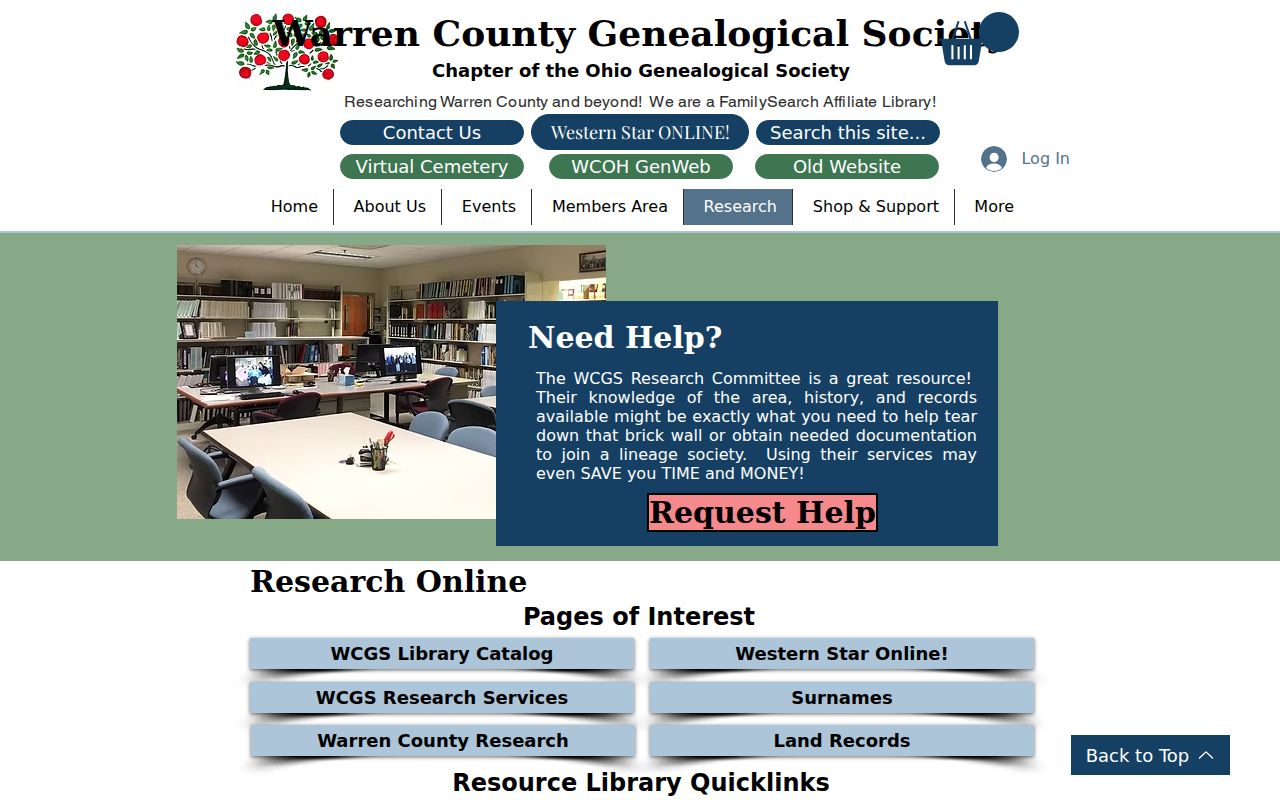
Use the online materials to narrow a surname or place, then verify the needed book, page, and publication convention in the library.
Deerfield Township City Directories and Census
Family-history work is strongest when a county directory lead is paired with a dated household record. Federal individual census schedules currently reach 1950 under the 72-year release pattern. WCGS also holds county history, phone-book, obituary, map, estate, and land aids that can test a name in more than one record type. The goal is a sequence of independently supported facts, not a claim that one printed list settles who lived at a place.
- Start with the exact name and locality in the available county directory or phone-book lead.
- Record the publication year, source title, and page before drawing any conclusion from the entry.
- Pair the closest available census year with the name, place, and household composition.
- Use a Recorder deed, tax source, or archival index when a land or legal-description connection is needed.
- Check obituary, cemetery, newspaper, probate, or map evidence to explain a move, death, or changed locality label.
A name disappearing from one source has several possible meanings. It may reflect a move, a changed spelling, a different county label, a death, or simply a collection gap. The date and scope of each source decide which possibility deserves more checking.
Western Star and Deerfield Township Directories
The WCGS and Ohio Memory Western Star collection gives a second, countywide historical trail. WCGS describes the project as covering 1807 through 2013, with 178,510 pages across 9,909 issues. Some issues are missing. A newspaper can add a notice, obituary, event, or place reference that helps test a directory lead, but it is not a substitute for a deed, census record, or complete household account.
Useful number. The Western Star project is broad, but its stated missing issues mean a failed search is not proof that an event or person was absent.
Mason Public Library adds another nearby route: its in-library Ancestry Library Edition covers directories, census, military, court and land, probate, vital, church, naturalization, and passenger material. It also lists NewsBank’s Mason Pulse-Journal for 2005 through 2012. These are research channels, not evidence of a particular Deerfield directory volume.
Deerfield Township Directory Research Requests
Warren County Historical Society lists telephone directories and yearbooks among its researched collections. Its Mary W. Klei Research Library is at 105 South Broadway in Lebanon. The library is open Tuesday and Thursday from 10 a.m. to 4 p.m. when a historian is available. Online holdings also name local churches, court records, photographs, atlases, cemetery material, newspapers, and vital material, all useful companions when a directory lead is thin.
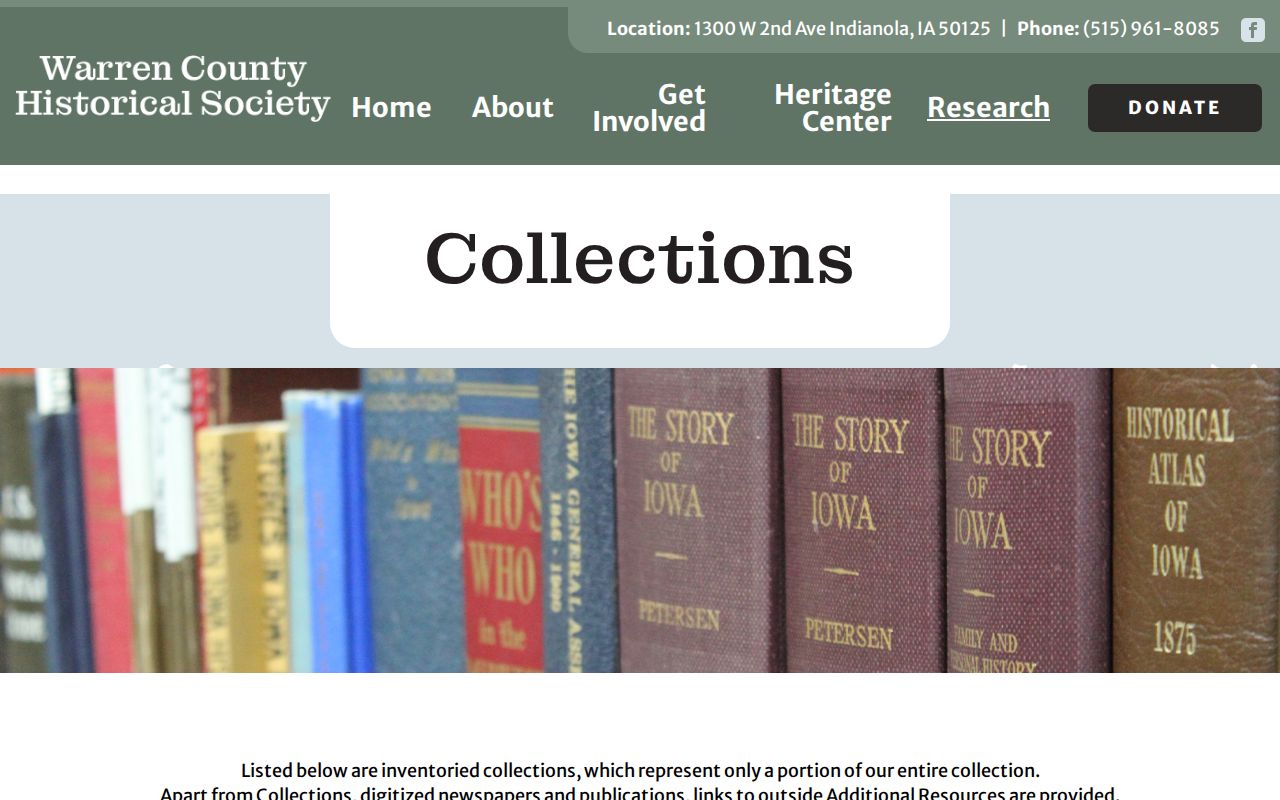
The society asks for a subject, names and dates, desired research time, and a phone number through its request process. Research starts at $5, then is $10 per hour for members or $20 per hour for nonmembers; copies are 25 cents plus shipping. That route is useful for a narrowly framed collection question, not a request to infer a person’s current circumstances.
Mason Library and Deerfield Township Sources
Mason Public Library, at 200 Reading Road, provides a nearby in-library database route. Its listed hours are Monday through Thursday, 10 a.m. to 8 p.m., Friday and Saturday, 9 a.m. to 5 p.m., with Sunday closure. The location’s Ancestry Library Edition access can help compare a Warren County lead against census, probate, court, land, church, and related historic sources without claiming a Township-specific directory series.
Write down the database, result date, and any source citation before carrying a name into an original record. A library result is most valuable when another local source can confirm the same person, place, and era.
Old Deerfield Township Directory Geography
Historic geography explains many puzzling results. Deerfield Township’s early settlement dates to the late 1790s, and the name itself is associated with deer licks and saline springs. The 1875 and 1891 Township maps can help translate an older landowner or place label into a Recorder legal-description trail. They cannot safely convert a historic label into a modern numbered address on their own.
King Mansion offers a grounded local history hook. It was built in 1855 and stood in the Kings Mills industrial setting associated with King Powder and Peters Cartridge near the Little Miami. Use that history to choose maps, land plats, recorded documents, and newspapers to inspect. Do not attach an unverified family or resident claim to the property. The same rule applies across every Deerfield Township city directory search: preserve what the source says, then corroborate it.