
Deerfield Township Neighbor Parcel Records
A block lookup begins with geography rather than a name search. Warren County's map and property tools show the parcels around a selected address and the public property facts tied to each one. Those facts can help explain lot lines, legal descriptions, owner records, and a nearby recorded transaction. They cannot establish the people who occupy every address on the block.
| Source | What It Shows About a Block | Access |
|---|---|---|
| Warren County Online Mapping | Selected and surrounding parcel geometry, account, parcel, owner, address, legal description, lot, and summary link | Interactive map, address/owner/parcel search, map browse, or buffer/select tools |
| Auditor Property Search | Owner, physical address, parcel or account, subdivision, and lot for a parcel | Public portal; owner and tax facts are not occupant proof |
| Recorder AVA | Recorded party, document, parcel, legal-description, and title trail | Party, parcel, document, date, book, or page search; no address field |
| Warren BOE geography reports | Street ranges, precincts, districts, and polling-place geography | Public report tools; not a household list |
| 1875 and 1891 Township maps | Historic landowner or place labels before current lots | Historic comparison source, not a present resident roster |
Read each line for what it actually records. An owner name may be the taxpayer or recorded party. A physical address identifies the property, while the separate mailing field is where the tax notice goes. Neither line proves that every person at an address is the current owner or that an owner lives there.
Deerfield Township Neighbor Map Method
The county GIS supplies the clearest public route from one address to the parcels around it. Search by Address or Parcel, open the selected property, then browse the nearby parcel layer or make a bounded spatial selection. The map supports buffer units in feet, miles, or meters and supports selections for parcels entirely contained in or intersected by the selected area. It does not document a named adjacent-parcel command.
- Find the focal address in the GIS and open its account or parcel result. Record the parcel number and legal description before moving outward.
- Click the surrounding parcels or use a small buffer/select operation. Keep the returned account, parcel, owner, address lines, lot number, and property-summary link with each parcel.
- Open the matching Auditor summary for a current property view. Separate its physical address from any mailing name or mailing address.
- When a recorded title question remains, take the parcel into AVA and compare the recorded party, document type, and legal description.
That address-to-parcel-to-recorded-document flow stays focused on the immediate block. For a full named-street chain, the Deerfield Township street directory follows the broader address-record method.
Deerfield Township Neighbor Parcel Fields
GIS and Auditor results contain a defined property inventory. That inventory is more useful than guessing from a map label, especially where a subdivision has many lots or a tax mailing address sits outside the neighborhood. The field names below are the public property facts described by the county, not a roster of people at an address.
| Returned field | What it can establish |
|---|---|
| Account number and parcel number | Identifiers that carry a property inquiry to the Auditor summary or Recorder route |
| Owner and address lines | Tax or ownership information plus the property address fields |
| Legal description and lot number | The land description used to compare parcel and recorded-document records |
| Use code and property summary link | Property classification and a route to the county's related summary |
| Mail name and mail address | A tax-contact destination that must not be treated as occupancy evidence |
A homestead flag is also a tax attribute, not a household listing. Keep it in the property context that the county assigns to it. If a parcel record is protected or redacted, do not infer the missing information from nearby maps or unrelated filings.
Deerfield Township Neighbor Deed Connections
Recorded documents can add a history layer to a nearby parcel, but AVA must be reached through its supported keys. The Recorder's system accepts first name, last or business name, start and end date, document number, document type, book, page, or parcel. At least one field is required. Address, municipality, subdivision, and tract search are disabled, so the parcel handoff is essential.
AVA result headers include document number, document type, recorded date, Party1, and Party2. A detail can include the legal or location description, parcel, party role, consideration, recording fee, and an image or print route where available. The fact that two owners appear in nearby filings can describe a recorded relationship or sequence. It does not establish friendship, household membership, or present occupancy.
Note: Warren Recorder reports deed indexing through 1797, but its separate notice about most online documents beginning in 2016 means an older inquiry may need the index, office, or Archives.
Deerfield Township Neighbor Civic Geography
Warren County Board of Elections tools add civic geography, not a private directory. The Street Range Report maps street ranges to precinct, district, and polling-place information. It uses beginning and ending precincts, district category and name, or polling place, then produces a PDF. The Precinct/Poll report can compare precincts and assigned locations, locations and assigned precincts, or districts and assigned precincts.
The Warren voter Report Creator presents report choices such as Walking List, Voters by District, Voter Vote History, Voters by Election, Voters by Party, and Voters by Household. It also exposes precinct, district, sort, mailing-label, and processing controls. Its availability does not remove statutory exclusions for Safe at Home and other protected voter records, nor does it disclose ballot choices.
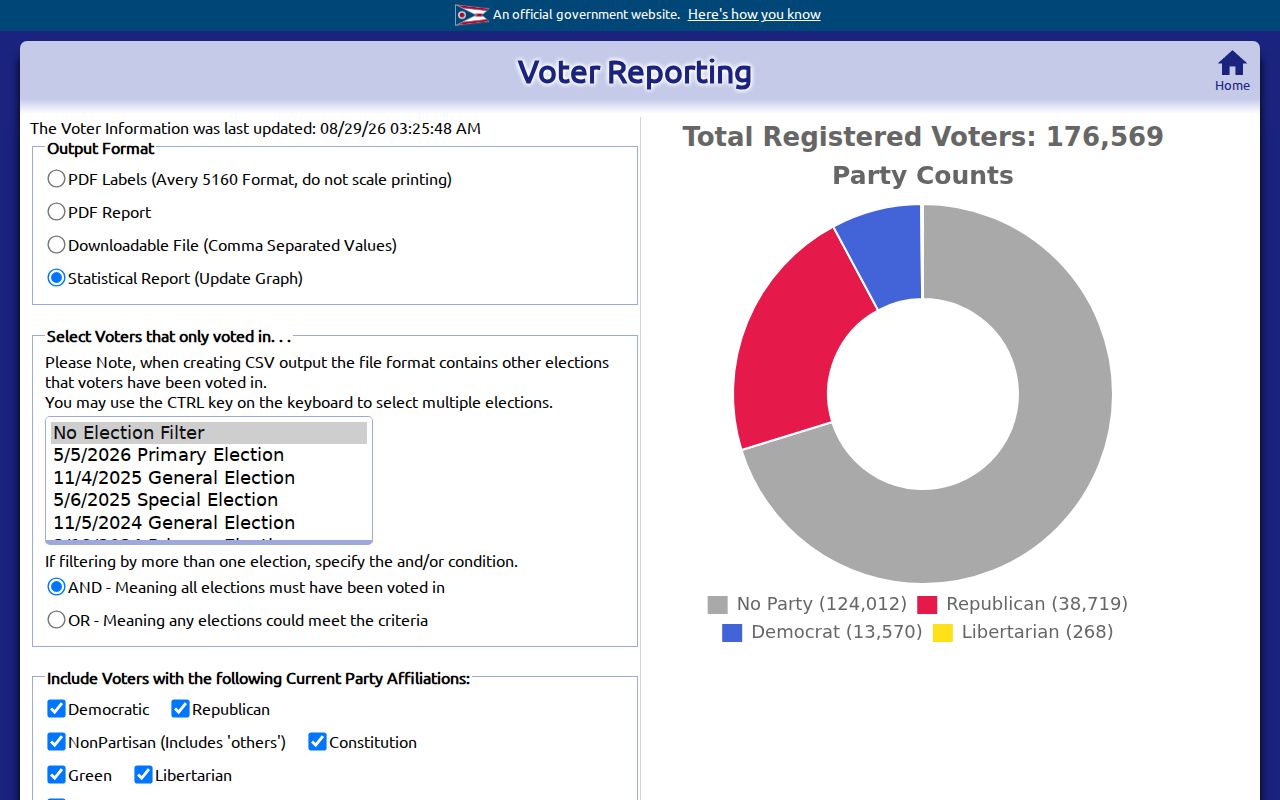
The report interface is best used to understand a public election-record route and its limits, not to turn a precinct into a private list of Deerfield Township neighbors.
Deerfield Township Neighbor Record Sources
Official records and private neighbor compilations have different strengths. The county sources show the public property or election context from the office that maintains it. Private compilations can be stale, mismatched, or incomplete, so they are not an official fallback when a parcel or voter result does not answer the question. A narrow request to the custodian is more dependable when a specific existing public record is needed.
| Official parcel or civic record | Private neighbor compilation |
|---|---|
| Has a named custodian, record purpose, source date, and specific public-record limits | May combine older material and must be checked against the custodian record |
| Shows parcel, recorded-document, precinct, or other defined public context | Cannot establish a person's current residence simply by listing a name near an address |
| Supports a focused request under Ohio law for an existing identified record | Does not override Safe at Home, voter confidentiality, BMV, or other privacy boundaries |
The Warren County Sheriff's public-record request page illustrates the value of a narrow record description, with fields for delivery method, record type, and details such as a report number, name, date, time, address, or offense.
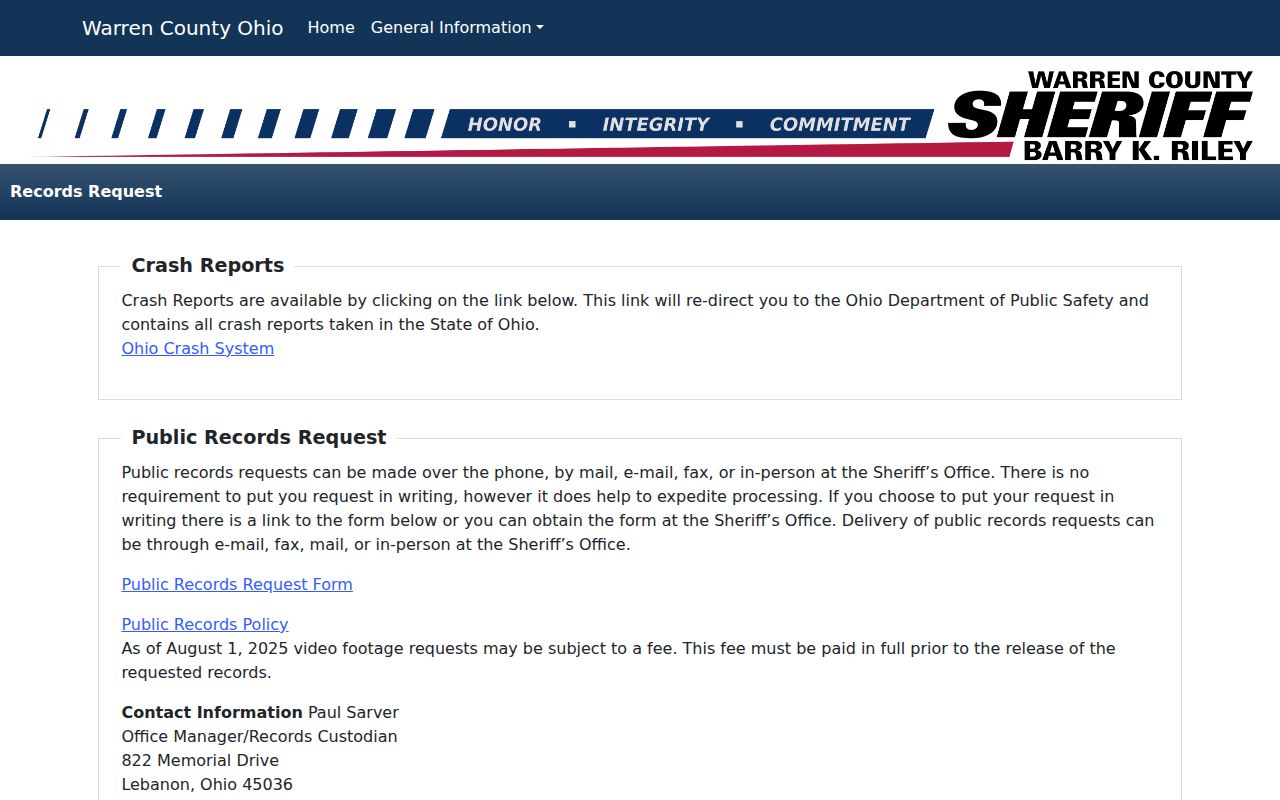
A request should ask for an existing record the office keeps, rather than asking an agency to create a block or household directory.
Deerfield Township Neighbor Directory Gap
No official public HOA, neighborhood-association, or civic-council directory with member contacts was located for Deerfield Township. That absence matters. There is no supported basis for creating a contact card or implying that a map search produces association membership. The Township's materials say many retention or detention systems are maintained by private property owners or HOAs, but that maintenance context is not a public membership roster.
| Community record question | Documented local route |
|---|---|
| HOA membership or household contacts | No verified Township-published public directory was found |
| Property development or use record | Township Planning and Zoning can hold address-tied permit, zoning, or final-action material |
| Stormwater maintenance context | Township materials describe private-owner or HOA maintenance in some systems, not a contact list |
Planning and Zoning requires an address for a formal complaint and administers permits, zoning certificates, site plans, variances, code enforcement, and related actions. Ask only for a particular property, application type, date range, and public final action. Protected complainant information should not be presumed available.
Deerfield Township Neighbor Block History
Historic maps can explain why a block does not line up neatly with older land labels. Deerfield Township's history links to 1875 and 1891 maps, and the county's Engineer inventory includes maps and aerials. Compare old labels with a present parcel's legal description rather than forcing a modern street number onto an old map. Historic maps show land and place context, not current residents.
Deerfield Township traces early settlement to the late 1790s and says the Township was established in 1803. Its original footprint included areas later associated with Turtlecreek, Union, and Salem. That history creates a useful place-name warning: an older land record may use a location name that is broader or different from the modern parcel location. The Recorder, Archives, and current GIS provide the bridge between eras.
Deerfield Township Neighbor Privacy
Parcel records are not a way around private information. Rental and utility lists are not public resident lists, and Ohio BMV personal data is available only through authorized statutory pathways. Safe at Home can shield voter and real-property linking data, while R.C. 149.45 provides for Internet redaction of certain identifiers held online by a custodian. Leave protected gaps intact.
Ohio's Public Records Act, R.C. 149.43, permits requests for reasonably identified existing public records. Inspection is free and copies carry actual cost, but the law does not require an office to create a custom neighbor list. The office may redact protected content and must state the legal basis for a denial. If a record seems inaccurate, contact the custodian that maintains it with the parcel, case, or document reference.
Lawful use. Use Deerfield Township neighbor records only for lawful personal research and public-record context. A knowing pattern that causes fear or mental distress can violate Ohio's menacing-by-stalking law, R.C. 2903.211, and repeated harassing communications can violate R.C. 2917.21.